
Chronic Obstructive Pulmonary Disease
Bronchodilators and corticosteroids reduce inflammation and open airways.
Effective medication delivery for COPD, asthma, and other respiratory conditions with professional setup, training, medication coordination, and ongoing support.
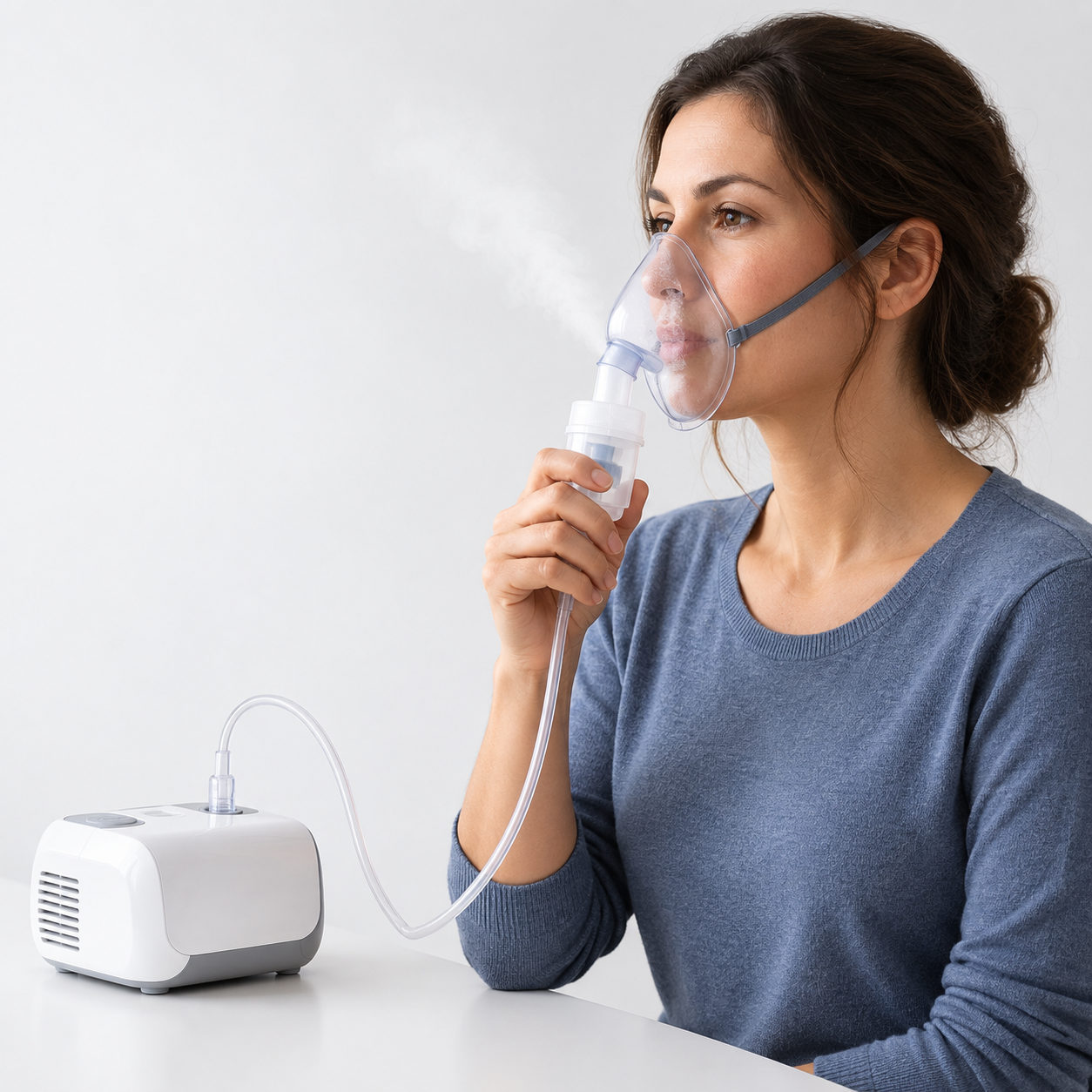
Nebulizers convert liquid medication into a fine mist so medication can reach deep into the airways where it is needed most.
VeroHealth supports the treatment process with equipment setup, patient education, medication coordination, and ongoing respiratory support.
Your healthcare provider determines the medication and treatment plan. VeroHealth helps support the equipment and therapy experience around that plan.
Bronchodilators and corticosteroids reduce inflammation and open airways.
Quick-relief and long-term control medications help manage symptoms effectively.
Antibiotics and mucolytics may be prescribed to address infection and secretions.
Child-friendly therapy options can support safe and effective breathing treatment.
VeroHealth provides several nebulizer equipment types, from dependable home compressors to portable and pediatric-friendly options.
Reliable, powerful units ideal for home use, with consistent medication delivery and durable construction for long-term therapy.
Lightweight, battery-powered nebulizers designed to help maintain therapy while traveling or spending time away from home.
High-frequency vibration technology can create a fine mist for faster, quieter respiratory medication delivery.
Kid-friendly nebulizers with child-sized accessories and designs intended to make treatment more comfortable for children.
Medication type, dose, and frequency are determined by the prescribing healthcare provider. These examples reflect the categories listed in the original page.
Medications that relax and open the airways, making breathing easier for patients with asthma, COPD, and other obstructive conditions.
Anti-inflammatory medications that reduce swelling and inflammation in the airways and help prevent exacerbations.
Medications that help thin and loosen mucus in the airways, making secretions easier to clear from the lungs.
Inhaled antibiotics can deliver medication directly to the lungs for certain respiratory infections while minimizing systemic exposure.
VeroHealth support extends from the first equipment setup through ongoing supply coordination, maintenance, education, and respiratory guidance.
Professional setup with hands-on education for proper use, cleaning, and maintenance.
Support with medication ordering, insurance coordination, and the supplies needed for uninterrupted therapy.
Access to respiratory support for therapy questions, troubleshooting, and clinical guidance.
Maintenance support and replacement of worn parts to help keep equipment operating effectively and safely.
Replacement supplies such as nebulizer cups, tubing, filters, and masks to help maintain therapy effectiveness.
Ongoing education about proper nebulizer technique and strategies to support respiratory health.
The process is designed to move from clinical prescription through coverage, equipment selection, setup, training, and ongoing support.
Your doctor evaluates your respiratory condition and prescribes nebulizer therapy with medications and treatment frequency based on your needs.
Our team verifies coverage for nebulizer equipment and medications and handles necessary authorizations and paperwork.
Based on lifestyle and therapy needs, we help identify an appropriate nebulizer type and accessories for the treatment plan.
A respiratory therapist can deliver and set up the nebulizer and provide training on proper use and maintenance.
VeroHealth continues with supply management, equipment maintenance, respiratory guidance, and coordination with the healthcare team.
Follow the prescribed treatment plan and the equipment instructions provided with your nebulizer. The sequence below reflects the original page guidance.
Wash your hands, gather the nebulizer and medication, and sit in a comfortable upright position.
Open the medication vial and add the prescribed amount to the nebulizer cup, adding saline only as directed.
Attach the nebulizer cup to the compressor tubing and connect the mouthpiece or mask securely.
Turn on the nebulizer and breathe normally through the mouthpiece or mask until the medication is nebulized.
After treatment, disassemble and wash the nebulizer cup and mouthpiece with warm soapy water and allow them to air dry.
Record treatment in a log or app if recommended by your healthcare provider to help monitor therapy effectiveness.
Quick answers to common questions about treatment frequency, cleaning, treatment time, coverage, and pediatric use.
Connect with VeroHealth for equipment questions, respiratory support, supply coordination, or help understanding the next step in the process.